
Ride
When the Rain Arrives Before You’re Ready
A practical way to slow the ride down when tropical rain changes grip, visibility, and the plan.
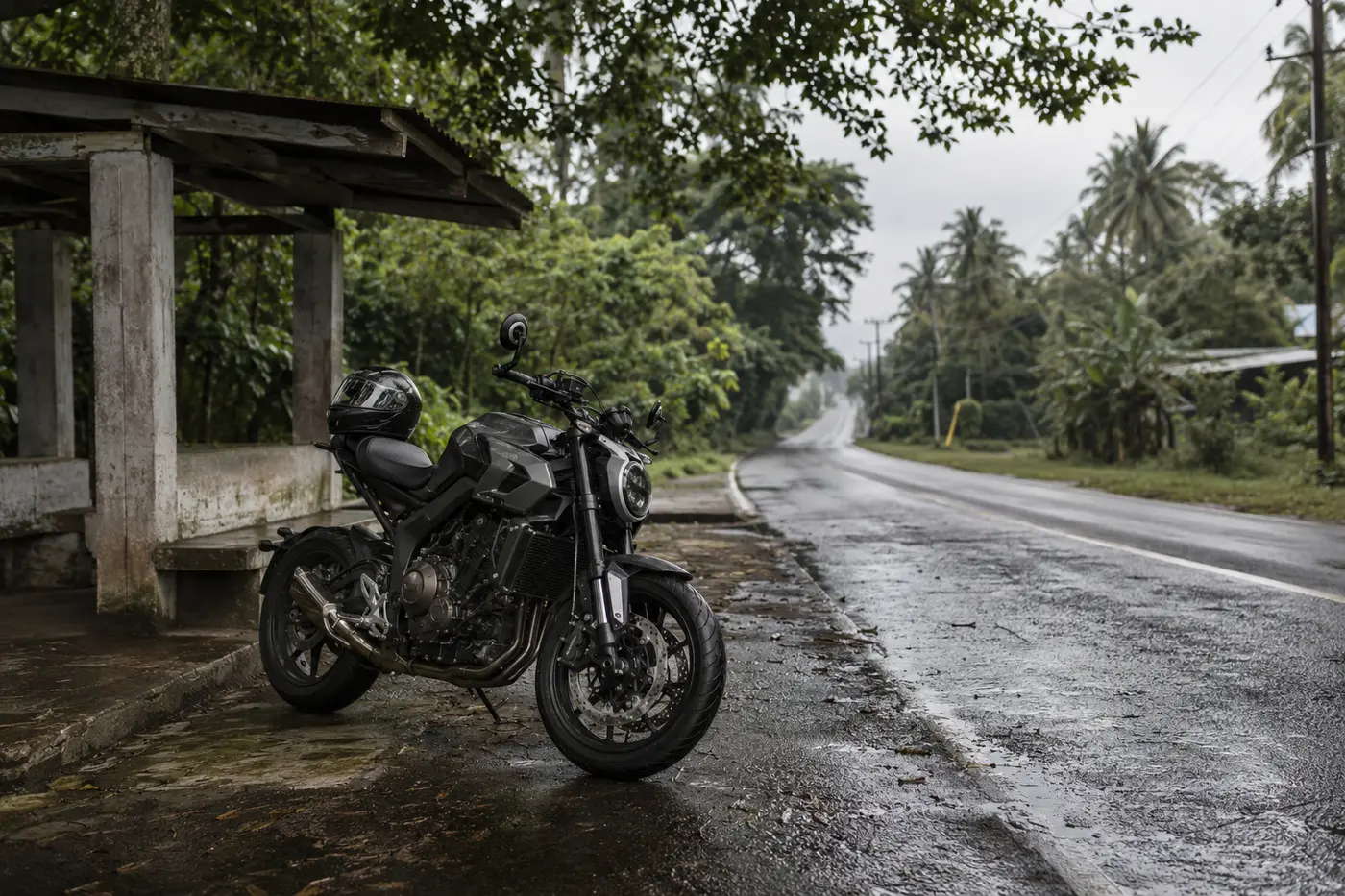
In the Philippines, a clear start does not guarantee a dry finish. The first drops can feel harmless, but they change several things at once: the visor becomes harder to read through, painted markings become slick, and the road begins lifting oil and dust left by traffic.
The useful response is not drama. It is time.
Make space early
Ease the pace before the rain becomes heavy. Increase the gap to the vehicle ahead and avoid riding beside cars where spray can erase your view. Smooth inputs matter more than speed: brake progressively, steer deliberately, and leave extra room for every decision.
Intersections, metal covers, painted arrows, and polished concrete deserve particular attention. Cross them as upright as possible and avoid sudden changes in throttle or direction.
Protect the view
A wet visor is manageable until fog forms on the inside. Open a vent or lift the visor slightly at low speed if it can be done safely. If visibility keeps getting worse, find a proper place to stop—well away from the traffic lane, with enough space to rejoin later.
Being able to continue is not the same as being able to see clearly enough to continue.
Decide whether the ride still makes sense
Watch the road ahead, not just the rain immediately around you. Standing water, branches moving across the carriageway, or traffic suddenly slowing can signal a bigger problem. Mountain weather can also intensify quickly and reduce visibility around bends.
There is no prize for forcing the original plan. A fuel station, covered shopfront, or other safe stopping point can turn a difficult ride into a short wait.
Check the motorcycle afterwards
Once the road is dry and the motorcycle is cool, look over the chain, tires, brakes, lights, and anything mounted to the bike. Rain exposes loose fittings and accelerates grime around moving parts. A quick clean and check prevents one wet ride from becoming the next ride’s problem.
This is general riding guidance, not a substitute for formal training, the motorcycle manufacturer’s instructions, or current weather and road information. When conditions exceed your experience, stop somewhere safe and wait.